

Sometimes, the first sign of a disappearing forest is not a fallen tree. It is a hillside that seems to be growing rocks.
Near Lake Victoria, Africa’s largest lake, the community of Old Bonjoge is surrounded by beautiful rolling hills and lush natural landscapes. The lake itself sustains tens of millions of people, making the health of the surrounding environment vital to both people and wildlife.
But the landscape is changing. For years, local residents have watched as more and more rocks appear on the hillsides. The rocks are not actually growing - they are being exposed as the soil around them washes away. Trees play an essential role in holding soil in place. Their roots help stabilize the ground, while the vegetation slows the movement of rainwater across the land. When trees disappear, heavy storms can strip away the soil, leaving bare ground and exposed rock behind.
The consequences reach far beyond the hills. Eroded land can contribute to flash flooding, putting lives and infrastructure at risk. Runoff can also carry agricultural chemicals into Lake Victoria, threatening the water quality of an ecosystem on which so many people depend.
Restoring the forest could help reverse this damage. But planting trees is only the beginning.
The Mission: Growing a Forest We Can Measure
Reforestation sounds simple enough: plant trees, give them time, and watch the forest return. In reality, successful restoration is much more complicated.
Trees need the right conditions to survive, and planting thousands of saplings means little if most of them fail to establish themselves. Some restoration projects count the trees they put in the ground without adequately tracking what happens afterward, creating what are sometimes called phantom forests - forests that exist in project reports but never truly take root.
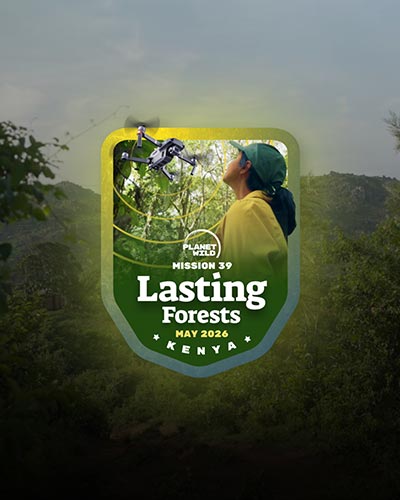
This mission takes a different approach. Working with veritree and Earthlungs, the project combines local knowledge with advanced technology to understand the landscape, monitor the trees and track the return of wildlife.
Before planting begins, drones equipped with LiDAR technology will scan the terrain using laser measurements. These scans help build a detailed digital model of the land, revealing its shape and features so the team can identify suitable locations for restoration.
Once the trees are planted, the monitoring continues.
Specialist instruments called dendrometers measure changes in tree growth, helping the team understand how the trees are developing over time. Bioacoustic sensors will listen to the surrounding environment, recording sounds that can help researchers identify species and monitor changes in forest life. Trail cameras will provide another window into the ecosystem, capturing images of wildlife as animals begin to return to the restored habitat.
Together, these tools offer a much clearer picture of whether the forest is genuinely recovering; not just how many trees have been planted, but how they are growing and what is happening around them.
With support from the Planet Wild community, the mission will fund the planting of 80,000 trees, along with three full years of monitoring. This extended commitment is crucial: a forest needs time, care and evidence-based management to become established and resilient.
The potential benefits extend well beyond the trees themselves. A healthier forest can help stabilize the hillsides, reduce soil erosion and improve the way water moves through the landscape. By limiting the amount of sediment and agricultural runoff reaching Lake Victoria, restoration may also help protect the lake and the communities that depend on it.
And for the people of Old Bonjoge, the project is about more than bringing greenery back to the hills. It is about protecting their surroundings, strengthening the landscape against environmental pressures and helping create a healthier future for generations to come.
Technology cannot grow a forest on its own. That takes living trees, the people who care for them, and time. But by combining local expertise with careful monitoring and modern tools, this mission is working towards something far more meaningful than a planting milestone: a forest that survives, develops and continues to support life long after the initial work is done.
Planet Wild Total invested: €100,000
Immediate impact:
- 80,000 native trees planted in the Old Bonjoge Forest
- Deployment of veritree’s tracking and verification technology
Ideal outcome:
- Stabilized watershed to prevent flooding
- Forest stewardship-based livelihoods for 50+ local families
- Restored biodiversity and return of endangered species
Update Videos:
Impact Update Year One
Scheduled for 2027