
South of the Amazon lies another extraordinary ecosystem that deserves our attention: the Cerrado, the most biodiverse savanna on Earth.
This vast landscape of grasslands, woodlands and scattered forests is home to around 5% of all plant and animal species. It also plays a vital role in South America’s water cycle, helping sustain rivers and water systems that support both people and wildlife.
Despite its ecological importance, the Cerrado remains far less well known, and while international attention has focused heavily on protecting the Amazon, agricultural expansion has placed increasing pressure on the Cerrado.
Over the past 50 years, more than half of this remarkable ecosystem has been cleared, largely to make way for large-scale soybean production. What was once an expansive, interconnected landscape has become a patchwork of isolated natural areas, surrounded by farmland and degraded land.
For wildlife, this fragmentation can be devastating. Animals lose access to food and shelter, populations become isolated, and the movement of species between habitats becomes increasingly difficult. Even when a patch of wilderness survives, it may struggle to support the full diversity of life it once held. Protecting what remains is essential. But reconnecting these scattered fragments could be just as important.
The Mission: Reconnecting a Fragmented Landscape
Brazil already has legislation requiring rural landowners to preserve and restore a proportion of native vegetation on their properties. In practice, however, complying with these requirements can be complicated. Restoration takes time, expertise and resources, and many farmers face challenges when trying to bring degraded land back to life.
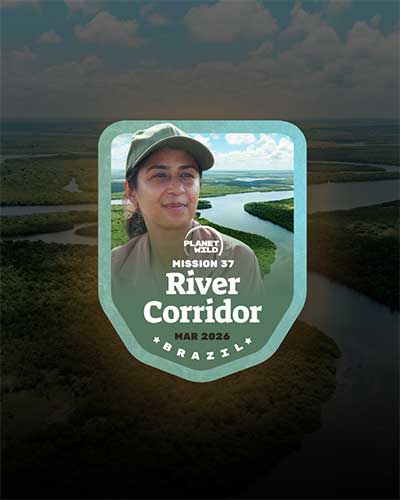
This is where the Black Jaguar Foundation comes in. Working directly with landowners, the organization helps restore suitable areas of degraded land and reconnect isolated patches of native vegetation.
Its long-term ambition is extraordinary: to create a biodiversity corridor stretching approximately 2,600 kilometres, linking habitats across the Cerrado and the Amazon.
Rather than treating each remaining forest or savanna fragment as an isolated island, the corridor aims to connect them into a larger, functioning landscape. This would give wildlife more opportunities to move between habitats, help populations remain connected and allow natural processes to operate across a much wider area.
The strategy focuses on two important elements.
First, restoring land along the Araguaia River. Following this natural waterway provides an opportunity to create a connecting route between the Cerrado and the Amazon. Restoration along the river can also support the recovery of groundwater systems and biodiversity, helping the surrounding landscape regain some of its natural resilience.
Second, bringing unproductive land back to life. Not every part of a farm is equally suitable for crops or profitable grazing. Degraded pastures and areas with low agricultural productivity can offer opportunities for ecological restoration. By focusing on these areas, the project helps landowners meet their conservation responsibilities while reducing the impact on more productive farmland.
With support from the Planet Wild community and Ecosia, the mission is funding the restoration of 30 hectares of degraded land, along with three years of monitoring to track the recovery of the Cerrado.
Monitoring is an important part of the process. Planting native vegetation is only the beginning; observing how the restored areas develop helps conservation teams understand whether the work is succeeding and where further support may be needed.
Thirty hectares may seem modest beside a proposed corridor spanning thousands of kilometres. But a landscape-scale project has to begin somewhere. Every successfully restored area can become another piece of the puzzle, helping bridge the gaps between habitats that have been separated for decades.
The future of the Cerrado depends not only on protecting the natural areas that remain, but also on finding ways for agriculture and conservation to coexist. By working alongside farmers, restoring degraded land and reconnecting fragmented habitats, this project is helping build a future in which biodiversity has room to move, recover and thrive.
A corridor of this scale will take years of dedication and collaboration. Yet every restored patch brings the vision closer: a living connection across South America, giving wildlife a better chance to flourish and helping protect one of the continent’s most overlooked natural treasures.
Planet Wild Total invested: €124,000
Immediate impact:
- 30 hectares of degraded Cerrado land under restoration
- Thousands of native trees planted and monitored for 3 years
Ideal outcome:
- Biodiversity corridor linking the Cerrado and the Amazon
- Wildlife returns along the Araguaia corridor
- River health recovery and groundwater recharge
Update Videos:
Impact Update Year One
Scheduled for 2027