
Plastic pollution often begins far from the sea.
Carried through storm drains and rivers, discarded waste eventually reaches the ocean, where it spreads through marine ecosystems, breaks down into microplastics and enters food chains.
If current trends continue, ocean plastic pollution is projected to quadruple by 2050.
The challenge is to stop plastic before it reaches the ocean - and that is exactly where this mission begins.
The Mission: Intercepting Plastic Before It Reaches the Sea
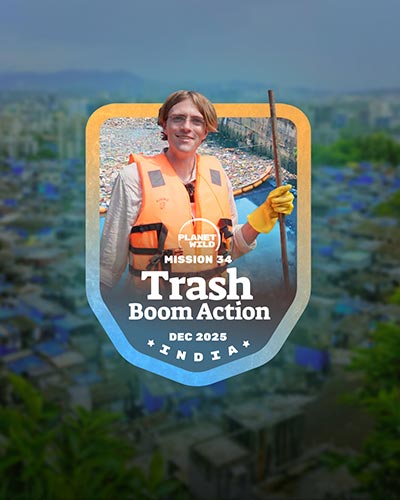
In Mumbai, India, gaps in reliable waste management mean discarded plastic often washes into storm drains and waterways before flowing directly into the ocean. The consequences are felt locally, damaging mangrove forests and flamingo habitats, but the pollution doesn't stop at the city's coastline. It continues into wider coastal and marine ecosystems.
To tackle the problem at its source, Planet Wild has partnered with Plastic Fischer, an organization developing practical, scalable ways to intercept plastic waste in rivers and waterways.
Their solution includes TrashBooms — floating barriers installed in polluted waterways to catch plastic before currents carry it out to sea. Positioned in some of Mumbai's most polluted storm drains, these barriers help collect waste that might otherwise become part of the ocean's growing plastic problem.
Plastic Fischer has already prevented 2.5 million kilograms of plastic from entering the ocean through its work. Now, the Planet Wild community is helping expand that impact.
The mission supports the installation and operation of a new TrashBoom in Mumbai, funds a major clean-up to remove accumulated waste, and helps upgrade and expand Plastic Fischer's purpose-built sorting and processing facility. Collecting plastic is only part of the solution; the waste must also be sorted and processed so it can be managed appropriately.
Together, these efforts aim to intercept hundreds of tonnes of plastic before they reach the sea, helping protect Mumbai's precious habitats and the marine ecosystems beyond.
The idea is simple but powerful: stop plastic where it enters the water system, rather than trying to retrieve it once it has spread across the ocean.
Every barrier installed and every load of waste collected is an opportunity to prevent further pollution. While river clean-ups alone cannot solve the global plastic crisis, they offer a practical way to reduce the flow of waste into the sea while highlighting the urgent need for better waste management on land.
By working with local expertise and supporting solutions that can be expanded, this mission is helping turn the tide on ocean plastic, one waterway at a time.
Planet Wild Total invested: €125,000
Immediate impact:
- TrashBoom installed - stopping 10,000 kg plastic/month
- Waste facility capacity doubled
Ideal outcome:
- Hundreds of tonnes of ocean plastic stopped
- Expand and replicate this model worldwide
- Mangrove and ocean habitat protected
Update Videos:
Impact Update Year One
Schedule for late 2026