
You’ve found a wildlife painting you love. The colours speak to you, the animal feels alive on the canvas, and you can already imagine it in your home. But then doubt creeps in: “Is it too big or too small? Will it overwhelm the space, or disappear into the background?”
With a few simple guidelines, you can select a wildlife painting that not only fits your wall but elevates your entire room.
1. Why Size Matters More Than You Think
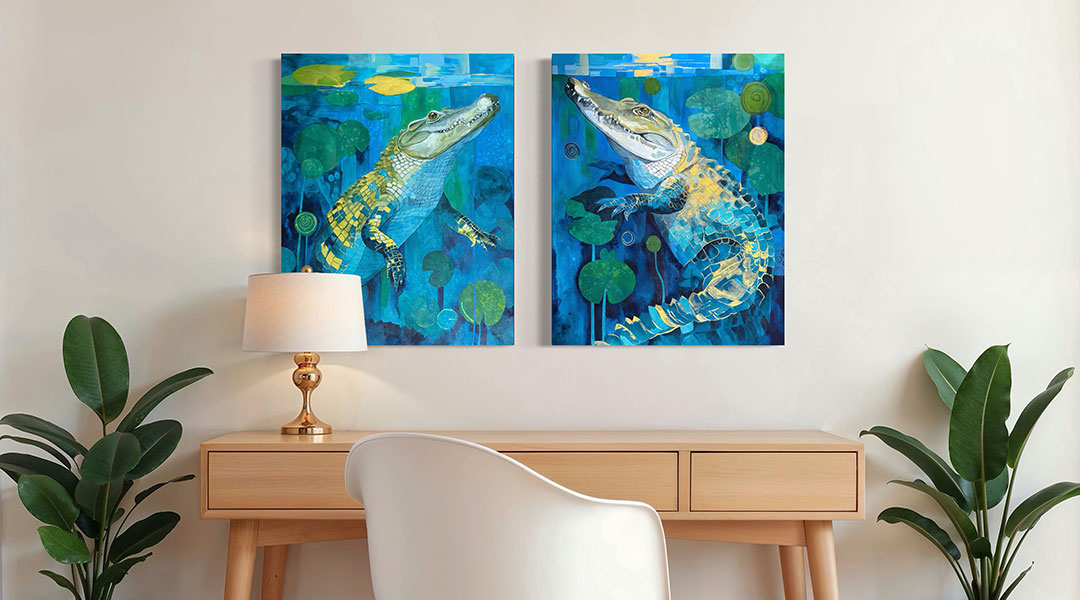
An artwork’s size has a powerful impact on how it’s experienced:
- Large paintings command attention. They create drama and presence, turning into the focal point of the room.
- Medium paintings balance well with furniture and other décor, adding beauty without dominating the space.
- Small paintings feel intimate, almost like a secret you share with the piece. They invite closer viewing and often work beautifully in pairs or clusters.
Wildlife art in abstract realism carries both boldness and detail, so size determines whether your painting roars across the room or whispers gently from the wall.
2. The Two-Thirds Rule
A simple, tried-and-true guideline: choose a painting (or multiple paintings) that takes up about two-thirds of the width of the wall or furniture it hangs above.
For example:
- A sofa that’s 210cm wide pairs beautifully with a painting around 140cm wide
- A console table of 120cm looks balanced with an artwork around 80cm wide
- For a single bed that is 91cm wide, pick artwork around 60cm wide
- For a three-quarter bed that is 107cm wide, pick artwork around 70cm wide
- For a double bed that is 137cm wide, pick artwork around 90cm wide
- For a Queen bed that is 152cm wide, pick artwork around 101cm wide
- For a King bed that is 183cm wide, pick artwork around 120cm wide
This proportion creates visual harmony - large enough to feel intentional, but not so big that it overwhelms.

3. Considering Height and Placement
It’s not just the width that matters - the height of the artwork and how high you hang it makes a difference too.
- Eye level is key. A general rule is to hang the centre of the artwork about 145–150 cm from the floor. This allows viewers to connect with the piece comfortably.
- Above furniture: Leave a gap of about 15–25 cm between the top of the furniture and the bottom of the frame. This anchors the painting to the furniture visually.
- Tall, narrow spaces: Consider vertical wildlife paintings that naturally echo the space’s proportions.
4. Statement Piece or Collection?
Ask yourself: Do I want one artwork to command attention, or do I prefer a grouping of smaller pieces?
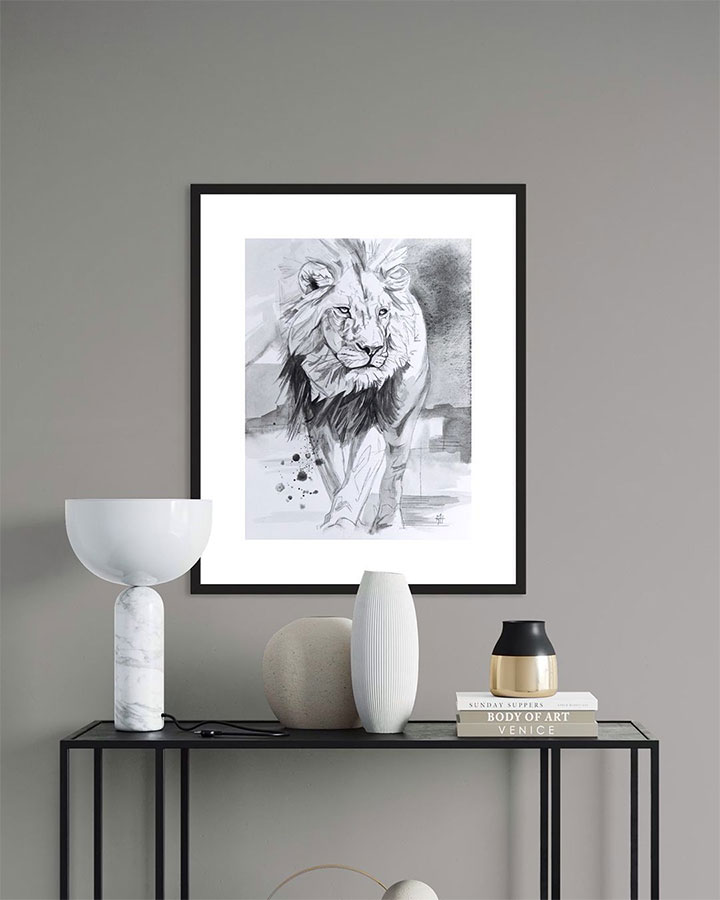
- Statement piece: A lion, leopard, or elephant painting can hold its own as the single focal point. Perfect for living rooms or entryways.
- Gallery wall: Several smaller wildlife studies can create a dynamic display. This works beautifully in hallways, staircases, or above a bed.
Both approaches can tell your story. The secret is choosing with intention rather than defaulting to size out of fear.
5. Room Size vs. Canvas Size
It’s tempting to think large rooms always need large paintings, and small rooms need small ones. But often, the opposite works too.
- In small spaces, a large painting can actually make the room feel bigger by drawing the eye outward.
- In large open-plan rooms, a cluster of medium or smaller works can create intimacy and define areas.
The trick is balance: the painting should feel like it belongs to the space rather than floating alone or overwhelming everything else.
6. Visualizing Before You Buy
If you’re torn between sizes, here’s a practical exercise:
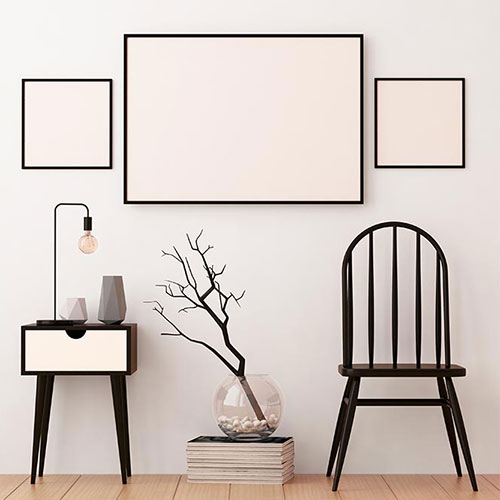
- Take painter’s tape or sheets of paper and mark out the dimensions of the painting on your wall.
- Step back and look at the space from different angles.
- Notice how it feels - does it fill the space with presence, or does it leave awkward gaps?
Many collectors are surprised at how much bigger a canvas looks once it’s actually on the wall. This simple test saves a lot of second-guessing.
7. The Emotional Factor
Size isn’t just about balance - it’s about emotional impact.
- A large canvas of a leopard in dramatic colour might stir a sense of awe every time you enter the room.
- A medium canvas of a lion cub might quietly radiate warmth and protection.
- A small, intimate piece of a bird might feel like a personal reminder of freedom.
When choosing, ask yourself: How do I want to feel when I see this painting every day? That answer will guide you toward the right size more than any measuring tape.
8. Trust the Artist’s Intention
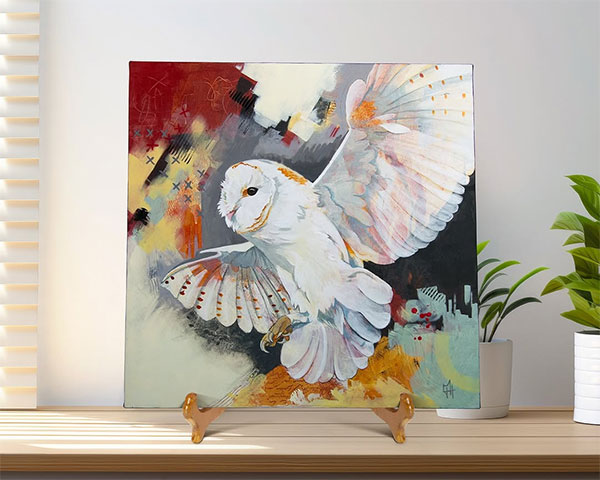
Artists often choose a specific size for a reason.
A powerful elephant might need the expanse of a large canvas to convey its majesty, while the delicacy of a bird in flight might shine better on a smaller one.
When in doubt, ask the artist (that’s me!) why the piece is that size.
Often, hearing the story of the canvas choice will help you understand whether it belongs in your home.
Final Thoughts
Choosing the right size wildlife painting doesn’t have to feel overwhelming. With a few simple guidelines - the two-thirds rule, eye-level placement, and intentional visualization - you can confidently select a canvas that belongs in your home.
Remember: it’s not just about filling wall space. It’s about creating a relationship between the painting, the room, and you.
So the next time you hesitate over “too big” or “too small,” trust both the practical tips and your instincts. Because when it comes to art, the right size isn’t just measured in centimetres or inches, it’s measured in how it makes you feel.